
The Cocktail Menu System Blueprint
Designing cocktails, menus, and systems that perform in real service.
COURSE OVERVIEW
Most cocktail courses focus only on drinks. This course focuses on the system behind them. From flavour and balance to menu engineering, profitability, operations, and execution, this program is designed to teach how cocktail menus actually work in real venues.
The goal is not simply to create interesting drinks. It’s to build menus that feel cohesive, perform under pressure, make financial sense, and create a better guest experience.
Throughout the course, you’ll learn how to approach menu development strategically combining creativity with structure, and flavour with operational thinking. Because a successful cocktail menu is not built on creativity alone. It’s built on understanding.
-
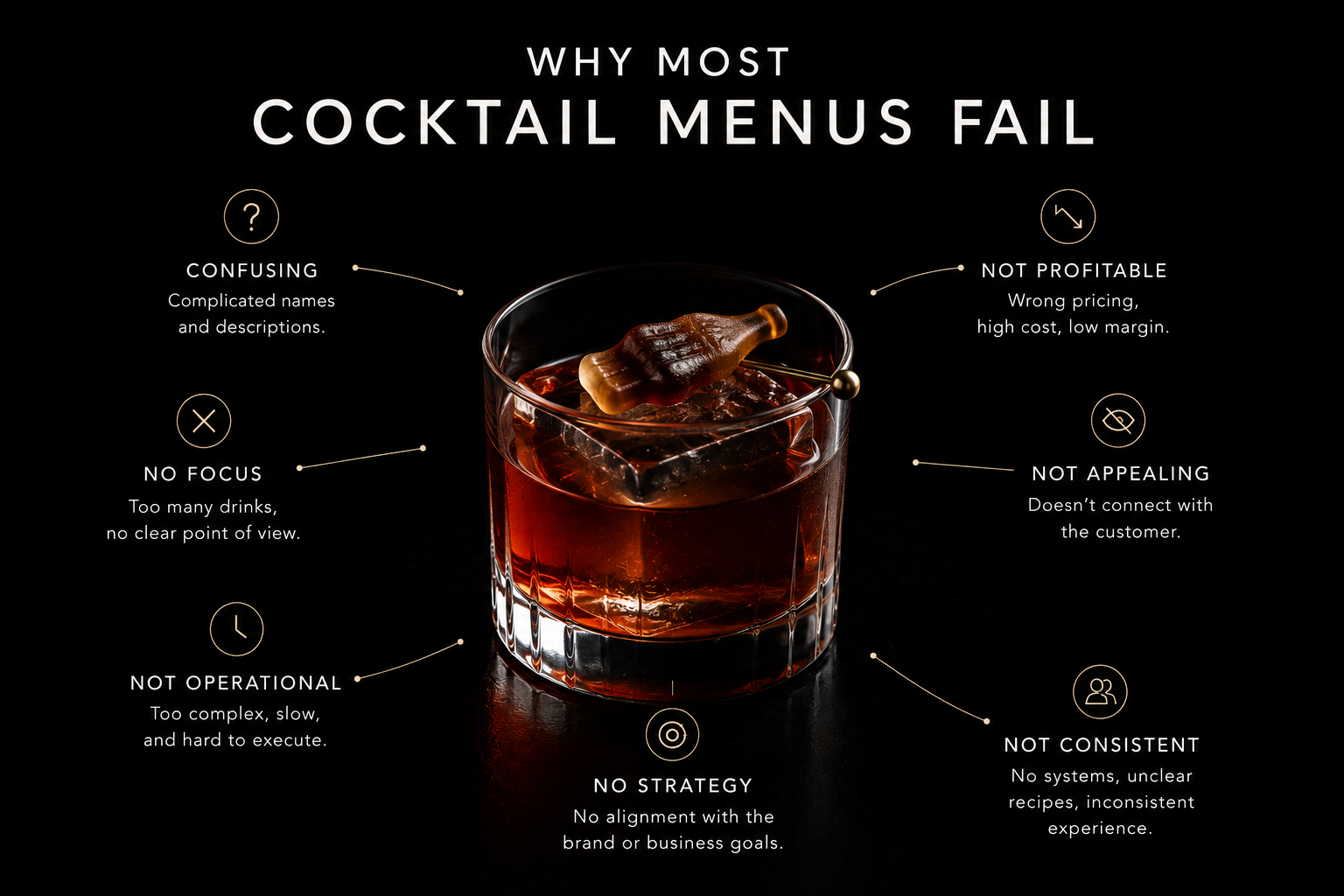
Most cocktail menus are built with creativity in mind but very little operational structure behind them. Drinks may look impressive on paper, but behind the bar they often create slow service, inconsistent execution, poor profitability and unnecessary stress for staff. Without proper systems in place, even good cocktail ideas can become difficult to scale in a real venue environment.
Common issues bars and hospitality teams face:
• Cocktails taking too long to execute
• Menus with poor profitability or weak GP margins
• No batching systems or prep structure
• Inconsistent drinks between staff members
• Overcomplicated recipes and unnecessary waste
• Menus with no clear identity or direction
• Lack of operational workflow behind the bar
• Staff struggling to confidently execute the menu -
The Cocktail Menu System Blueprint was created to solve these problems.
This course teaches you how to build cocktail menus that are not only creative, but operationally efficient, profitable and designed for real-world hospitality environments. You’ll learn how professional beverage programs are structured through systems, workflow, batching, costing, menu engineering and operational thinking the same foundations used behind successful modern venues.
-
Build profitable cocktail menus
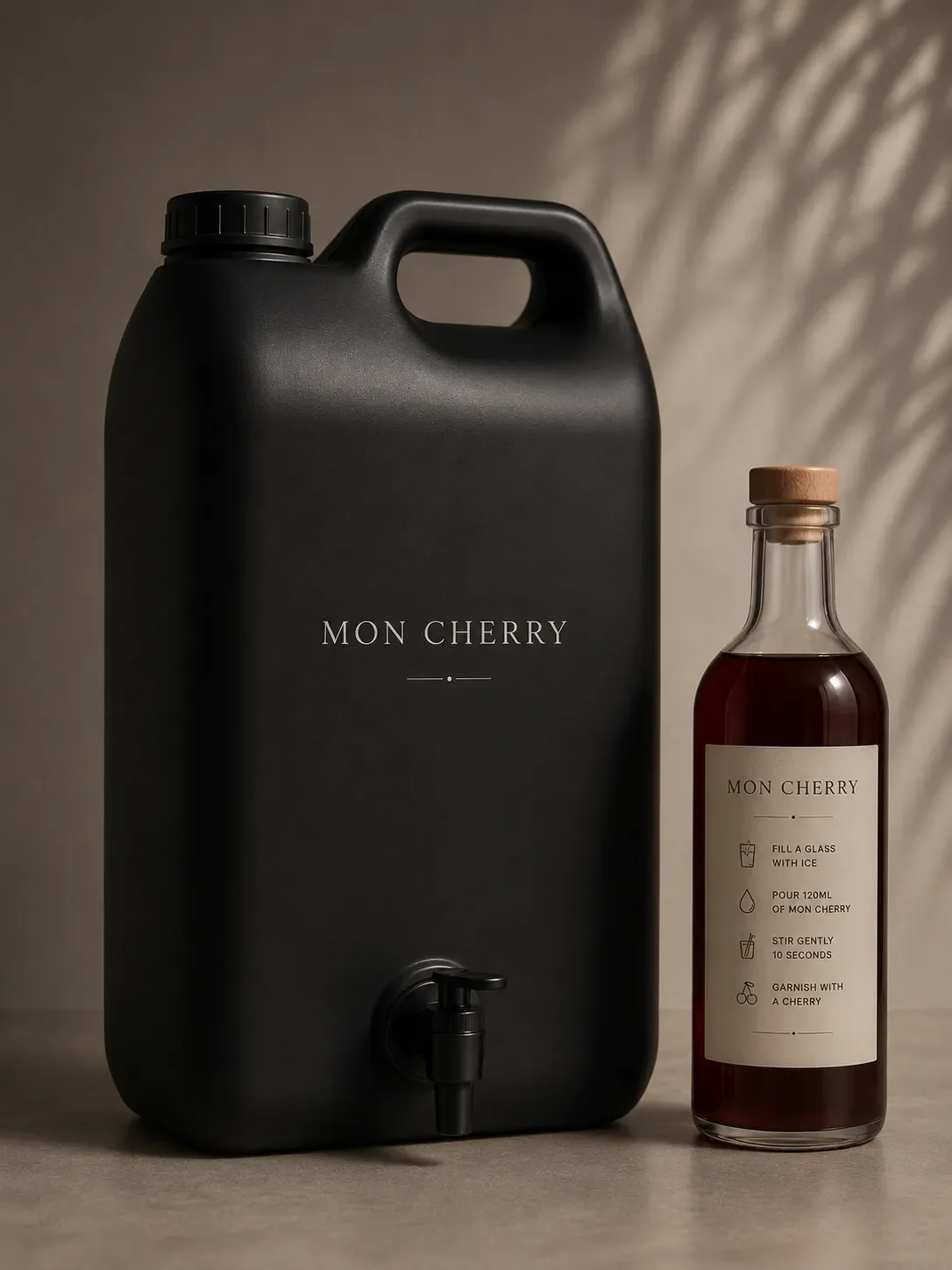
Create efficient batching systems
Reduce waste and improve GP
Design cohesive beverage programs
Train staff more effectively
Open bars with operational clarity
-
How to create high-performing cocktail menus
Flavour balance and cocktail structure
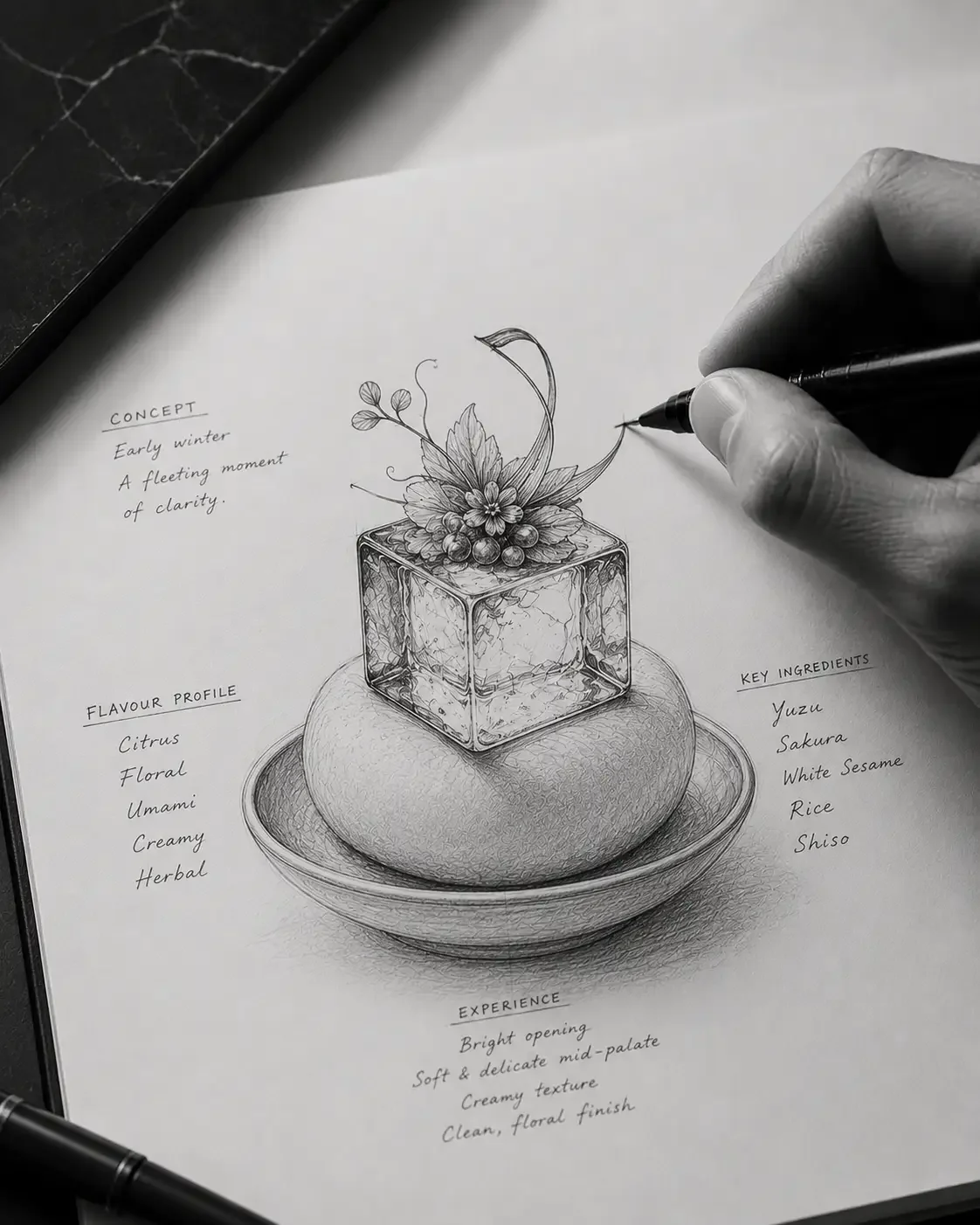
Cocktail development from concept to execution
How to create drinks that fit a venue’s identity
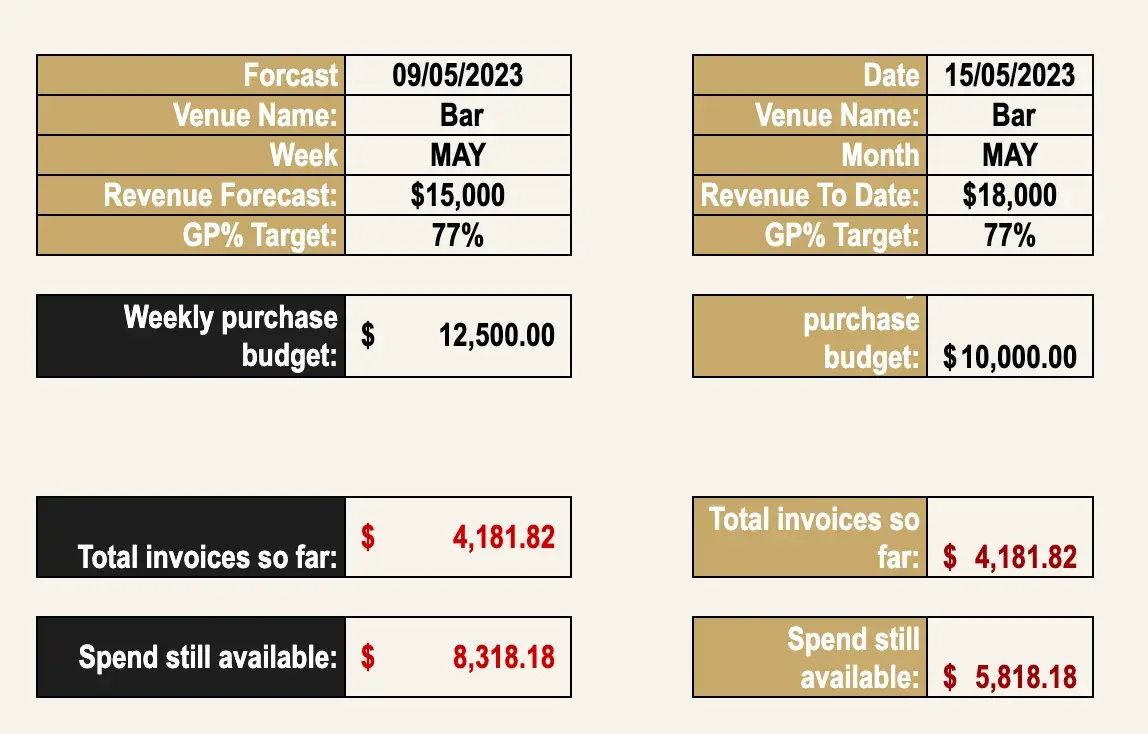
Costing, pricing, and menu profitability
Menu engineering and guest psychology
How to design menus that sell
Batching, speed, and operational efficiency
Staff consistency and service systems
Real-world cocktail menu strategy used in hospitality venues
-
MODULE 1 : FOUNDATIONS, MINDSET & WHY MENUS FAIL
-
Lesson 1: Why most cocktail menus fail
Most cocktail menus fail not because of creativity, but because there is no system behind them. In this lesson, you’ll learn the common mistakes venues make and why structure matters more than complexity.
-
Lesson 2: What makes a high performing menu
A high-performing cocktail menu is built around more than creativity alone. In this lesson, you’ll learn how consistency, speed, clarity, and profitability work together to create menus that perform successfully in real service.
-
Lesson 3: Understanding your venue & customer
A cocktail menu should never exist in isolation. In this lesson, you’ll learn how to align drinks with a venue’s identity, understand guest behaviour, and create menus that feel cohesive, intentional, and connected to the overall experience.
-
Lesson 4: Brand Identity & menu aligment
A cocktail menu should feel connected to the venue it exists in. In this lesson, you’ll learn how to align drinks with a venue’s concept, cuisine, atmosphere, and customer experience to create menus that feel cohesive, intentional, and authentic.
-
-
MODULE 2 : FLAVOUR & BALANCE
-
Lesson 1: Understanding Cocktail Structure
Every cocktail is built on the same core foundations. In this lesson, you’ll learn how spirit, acidity, sweetness, dilution, and bitterness work together to create structure, balance, and consistency within a drink.
-
Lesson 2: Balance in practice
Balance is not fixed it constantly changes depending on ingredients, dilution, temperature, and execution. In this lesson, you’ll learn how to taste, adjust, and correct cocktails in real time to create consistency beyond simply following recipes.
-
Lesson 3: Ingredients & seasonality
Great cocktails start with understanding ingredients and when to use them. In this lesson, you’ll learn how seasonality affects flavour, cost, freshness, and menu development, and how smart ingredient choices improve both creativity and consistency.
-
Lesson 4: Fixing a Bad Cocktail
A bad cocktail is not a failure it’s information. In this lesson, you’ll learn how to diagnose imbalance, identify what a drink is missing, and make small adjustments that transform weak cocktails into refined and balanced ones.
-
Lesson 5: Allergies, Dietary Requirements & Guest Safety
A great cocktail means nothing if guest safety is overlooked. Understanding allergies and dietary requirements is an essential part of modern hospitality. This lesson explores ingredient awareness, cross-contamination, communication, and staff protocols designed to create safer, more professional service environments behind the bar and across the venue.
-
-
MODULE : THE COCKTAIL DEVELOPMENT SYSTEM
-
Lesson 1: Creativity Through Structure
Strong cocktail creation doesn’t start with randomness it starts with understanding structure. In this lesson, you’ll learn how classics, balance, and concept development work together to create cocktails that feel original, intentional, and functional.
-
Lesson 2: Build from an idea
We break things down into simple, manageable parts so you never feel overwhelmed.
-
Lesson 3: Design the Drink
Great cocktails are not built randomly they are designed with direction and intention. In this lesson, you’ll learn how to develop drink concepts, translate ideas into flavour, and create cocktails that feel cohesive, balanced, and connected to the venue.
-
Lesson 4: Testing, Adjustment & Feedback
Great cocktails are rarely perfect on the first attempt. In this lesson, you’ll learn how testing, tasting, adjustment, and feedback refine a drink over time and transform good ideas into balanced, service-ready cocktails.
-
-
MODULE 4: COSTING & PROFIT
-
Lesson 1: Why most cocktails are not profitable
Most cocktails fail financially long before anyone notices. In this lesson, you’ll learn how complexity, waste, poor costing, and inefficient systems quietly reduce profitability — and how strong operational decisions create menus that are both creative and sustainable.
-
Lesson 2: How to Cost a cocktail
Costing is more than calculating ingredients it’s understanding how a drink performs financially. In this lesson, you’ll learn how to cost cocktails properly, manage margins, and build drinks that make sense operationally as well as creatively.
-
Lesson 3: Maximising margin without compromising quality & waste control
Strong profitability comes from smart systems, not cutting corners. In this lesson, you’ll learn how to improve margins through better ingredient usage, waste reduction, cross-utilisation, and operational decisions without compromising the quality of the guest experience.
-
-
MODULE 5 : MENU ENGINEERING & PERFORMANCE
-
Lesson 1: Menus are not recipe sheets
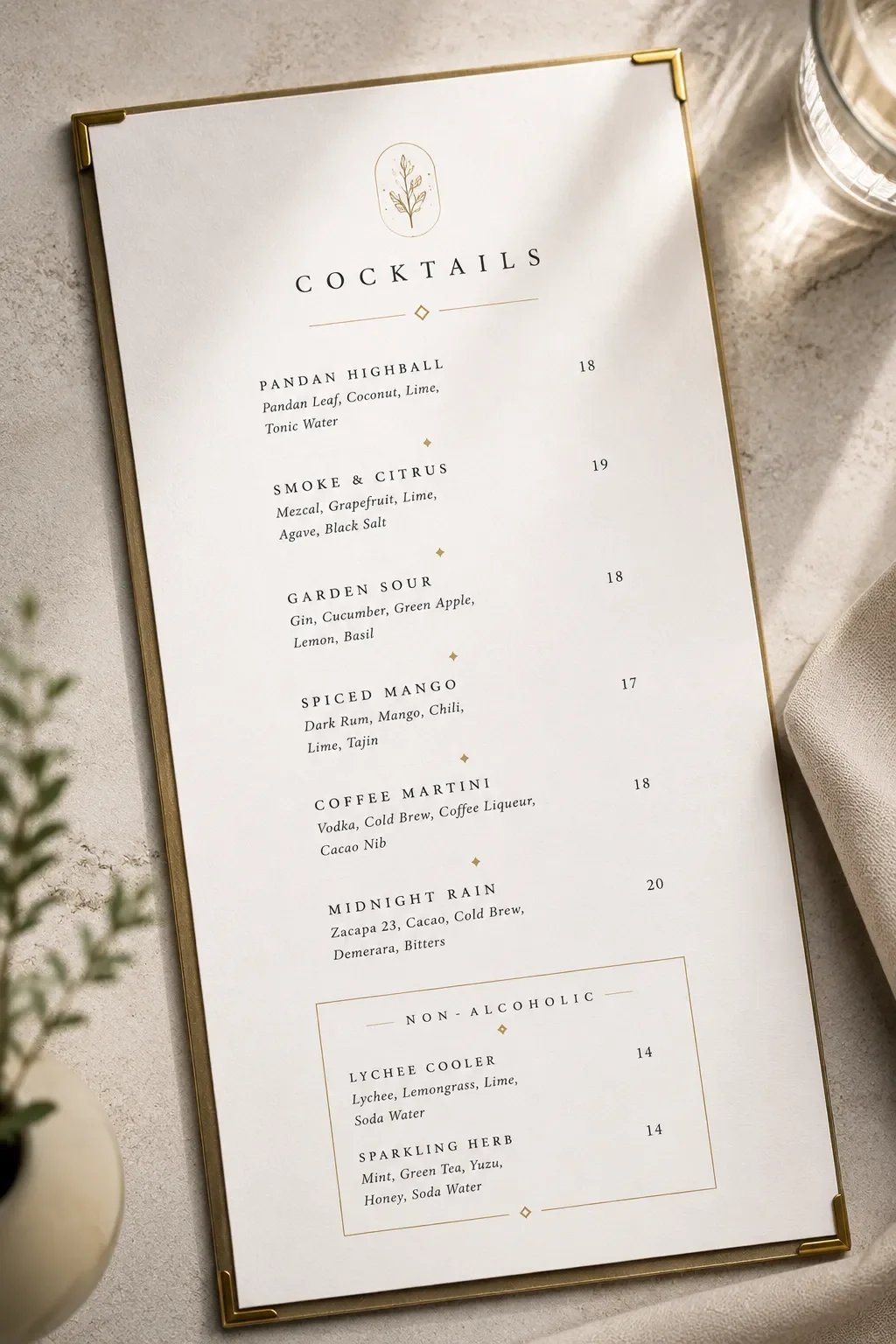
A cocktail menu should communicate flavour, not overwhelm with technical detail. In this lesson, you’ll learn how to write clearer, more effective menu descriptions that guide guest decisions, improve readability, and make cocktails more approachable and appealing.
-
Lesson 2: Structuring the menu, naming & descriptions
This module focuses on the core of cocktail creation flavour and balance. You will learn how to construct drinks using a structured approach, understand how ingredients interact, and develop the ability to adjust and refine cocktails quickly.
-
Lesson 3: Menu Engineering
Menu engineering is the process of designing a menu to improve both guest behaviour and profitability. In this lesson, you’ll learn how to analyse cocktail performance, understand menu psychology, and structure your menu strategically using concepts like stars, plow horses, puzzles, and dogs.
-
Lesson 4: Cocktail Marketing & Guest Psychology
This lesson explores how marketing, psychology, and presentation affect guest behaviour and how to design cocktails people actually remember, order, and talk about
-
-
MODULE 6 : EXECUTION & OPERATIONS
-
Lesson 1: Designed for speed & efficiency
Great cocktails need to work under pressure, not just in development. In this lesson, you’ll learn how batching, prep systems, and smart drink design improve speed, consistency, and efficiency during real service.
-
Lesson 2: Training staff for consistency
A cocktail is only as consistent as the team making it. In this lesson, you’ll learn how training systems, recipe standards, batching procedures, and product knowledge create reliable execution and a more consistent guest experience.
-
Lesson 3: Building a menu from start to finish
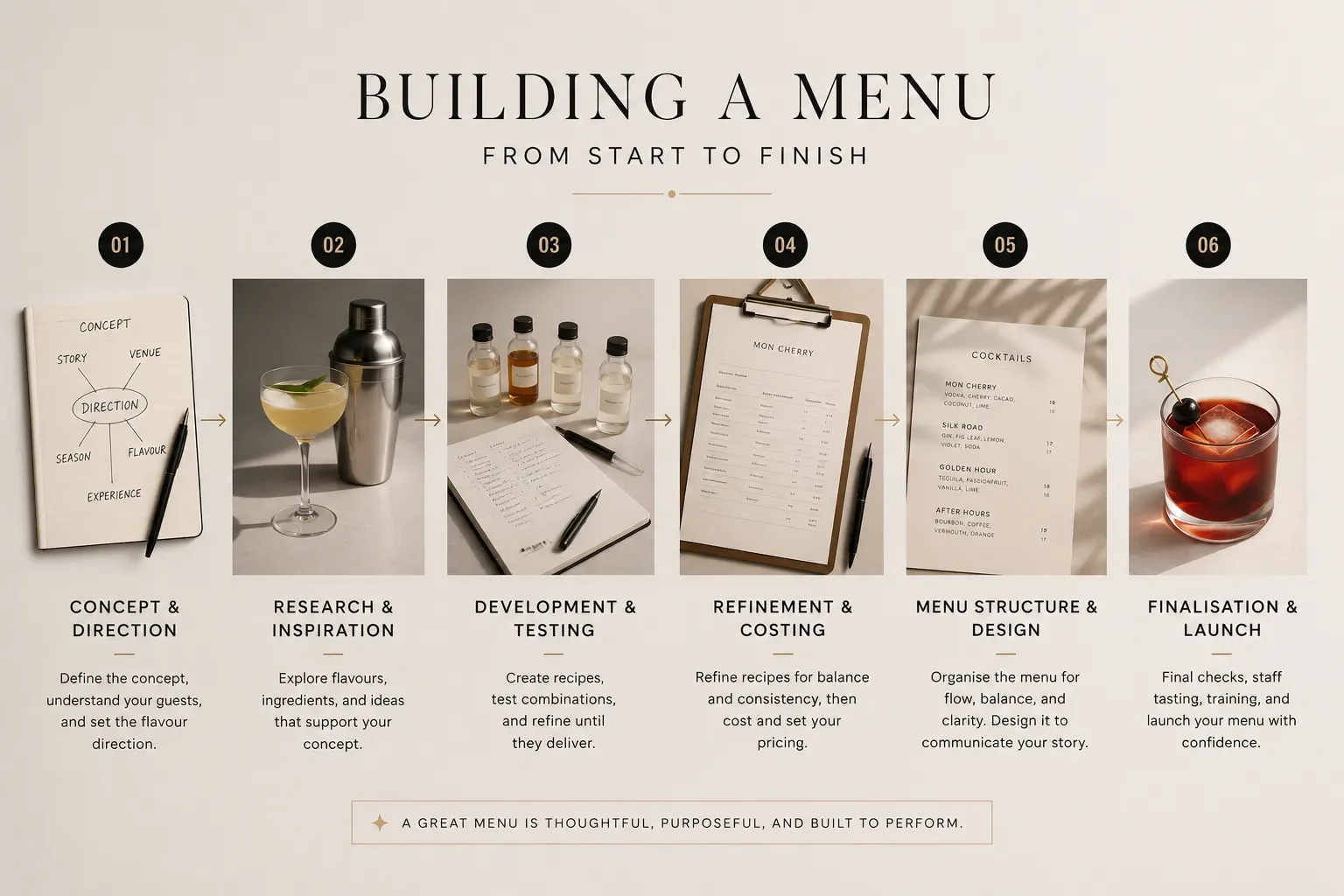
Building a cocktail menu is a process, not a moment of inspiration. In this lesson, you’ll learn how to move from concept and flavour direction through to development, refinement, costing, and final menu structure to create a cohesive and functional cocktail program.
-
Lesson 4: Case study : What changed & why ?
Small adjustments can completely change how a menu performs. In this lesson, you’ll follow a real-world case study exploring how changes to menu wording, batching, training, structure, and operational systems improved consistency, speed, and overall performance.
-